Events
Post-Event Follow-Up: The Most Wasted 48 Hours in Events
The event ends and momentum evaporates. See how to automate post-event follow-up: surveys, segmented messages, resources, and analytics, in the first 48 hours.
•5 min read
The event ends and momentum evaporates. See how to automate post-event follow-up: surveys, segmented messages, resources, and analytics, in the first 48 hours.

The closing session ends, the venue empties, and the most valuable window of the entire event opens: the first 48 hours, when every attendee still remembers what happened. Most organizers spend it decompressing. Post-event follow up done in that window — surveys, thank-yous, resources, and data — compounds into sponsorship renewals, speaker commitments, and registrations for the next event. Done a week later, the same messages land as an afterthought.
The reason it slips isn't laziness. It's that follow-up is manual: segmenting lists, drafting emails, building surveys, exporting spreadsheets — a week of work that starts at the exact moment the team has the least energy. Here's the five-step workflow that runs itself instead.
Feedback quality decays with every day that passes, so the survey goes out first — while sessions, rooms, and conversations are still easy to recall. A structured post-event survey covers the ground that informs next year's plan:
With Msg2ai, the survey goes to every attendee as a message on the channel they used all event — no new app, no login to forget. Responses land in one dashboard instead of an inbox, so the feedback you need on Monday morning is already collected.
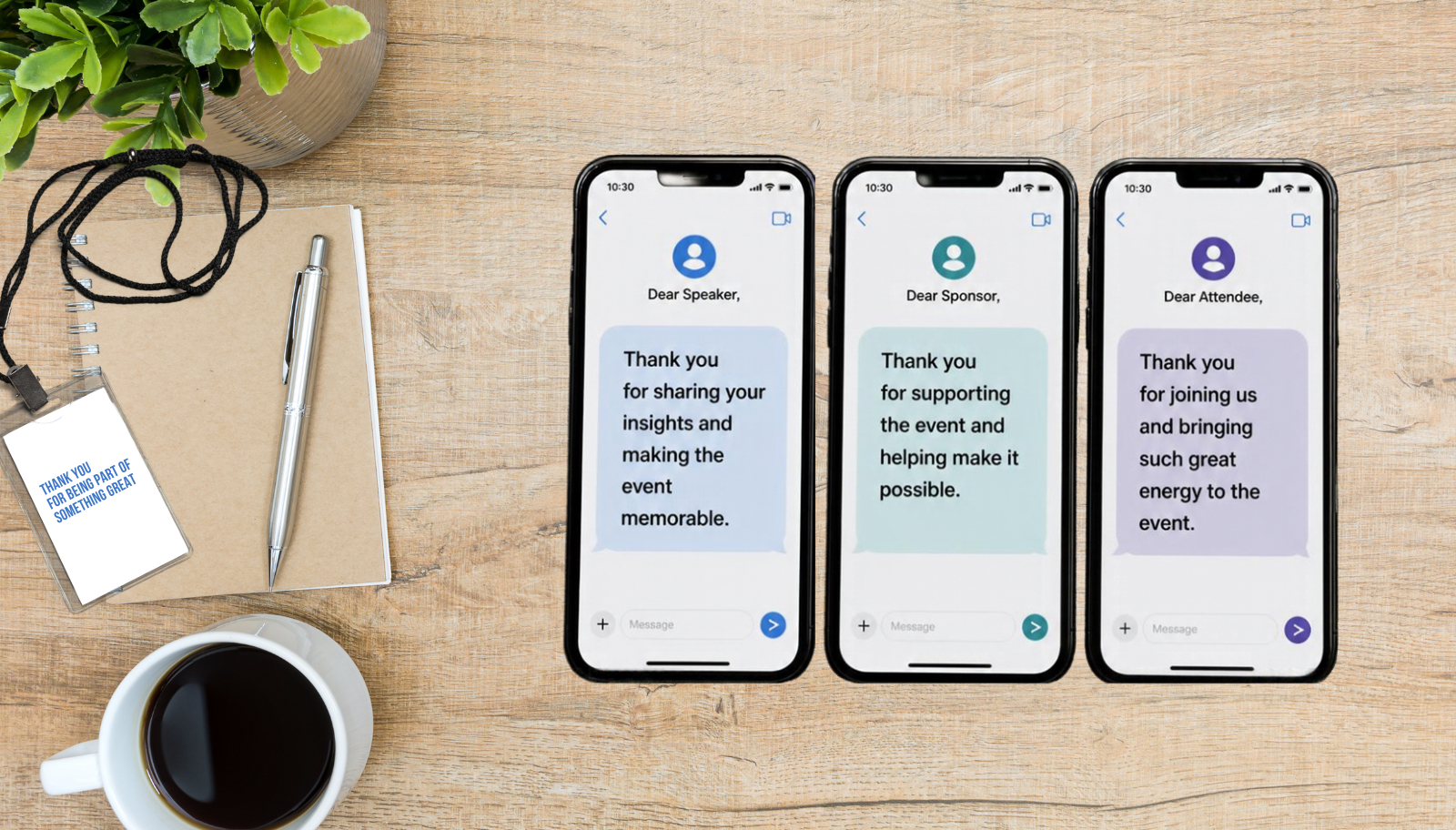
"One thank-you email to all" is the fastest way to make your most important people feel like a mailing list. Speakers, sponsors, exhibitors, VIPs, and general attendees each made a different investment and deserve a different message.
Msg2ai's broadcast messaging sends to the segments you already defined during the event — all attendees, track groups, VIPs, speakers, sponsors, exhibitors — so each group gets a note that names what they did. The people who carried your event get a personal 1-to-1 message rather than a blast. Because it goes out over WhatsApp, SMS, or Telegram, it arrives where these conversations have been happening all along, in 126 languages for international crowds.
Attendees didn't attend to collect a badge; they attended for the material — the deck they couldn't photograph, the talk that conflicted with another, the contact they meant to swap cards with. Post-event resource sharing turns your event content into a second wave of engagement.
Send session materials, recordings, and speaker resources as direct messages, segmented by the tracks each attendee joined. Every message is a genuine reason to open the thread again — which is exactly what keeps the conversation alive for step 4.
The attendee list you built this year is the marketing asset your next event runs on — if you enrich and segment it now, while the context is fresh. Attendee records came in from Eventbrite, Ticket Tailor, custom forms, or CSV, JSON, and XLSX imports; Msg2ai's audience management adds LinkedIn profile enrichment for attendees, speakers, and sponsors, filling in title, company, industry, and location automatically.
Segmented by role, industry, and behavior, the list becomes precision-targeted: early-bird offers to this year's most engaged attendees, sponsor outreach backed by engagement data, track-based announcements for the sessions people chose. The organizers who deliver real-time attendee support during the event are the same ones who start the next event's marketing with a warm, segmented audience instead of a cold list.
By the time the venue invoice arrives, the real verdict on your event is already in the data. Msg2ai's analytics dashboard reports what happened: session attendance and popularity, attendee flow through the venue, message engagement, survey response rates, no-show analysis, and sentiment across the conversation. An event AI assistant captures the conversations; the analytics turn them into next year's floor plan.
That's the difference between planning the next event on anecdote and planning it on evidence — which rooms to grow, which tracks to cut, which time slots to rethink. Paired with the front-door lessons from the hidden cost of the registration queue, you get a full-funnel view: how many registered, how many attended, what they did once there, and what they said afterward. It's the same data discipline behind a well-run AI-powered event communication platform, applied to the window after the event.
Within 48 hours — while the event is still fresh enough that surveys capture real detail and resource messages feel like part of the event rather than marketing. Msg2ai automates the sends so the window doesn't depend on anyone's Monday.
Five things: overall satisfaction, which sessions attendees attended, the value they got for their time, what to improve, and whether they'd return. That set maps directly to next year's programming and sponsorship conversations.
Give them reasons to open the thread: personalized thank-yous by segment, session resources matched to the tracks they joined, and early access to the next event. Ongoing engagement runs on the same messaging channel they used during the event.
Put your post-event follow up on autopilot — run surveys, segmented messaging, and analytics with Msg2ai, and win back the 48 hours.
An AI host for vacation rentals answers 80% of guest questions instantly — handing property managers 10+ hours a week back. See where that time goes.
An event registration queue burns your first impression and your staff budget. QR entry cut one conference's entry time by 70% — here's the math.